
If you're shopping for a used Buick Lucerne, 2008 is the year we'd inspect most carefully, while 2010 is the year we'd start looking for first. But the year alone doesn't tell the whole story.
The Lucerne was sold from 2006 through 2011, and there is a meaningful difference between an early 3.8L V6, a later 3.9L V6, and a Northstar V8. On cars this old, maintenance history, rust, transmission condition, electrical repairs, and previous-owner care can matter just as much as the model year.
A well-kept 2007 with the 3.8L can be a better purchase than a neglected 2011. That's why we'd use the year as a starting point, not the final answer.
Buick Lucerne Years to Avoid: Quick Answer
| Model year | Our verdict | What we'd watch most closely |
|---|---|---|
| 2006 | Higher caution | First-year car, recall history, age-related condition |
| 2007 | Higher caution | Electrical/mechanical condition and maintenance history |
| 2008 | Highest caution | Below-peer reliability data and documented rear electrical-center issue |
| 2009 | Conditional buy | Newer 3.9L V6, but reliability record still deserves inspection |
| 2010 | Best starting point | Strongest overall case among the Lucerne years |
| 2011 | Good candidate if clean | Final year, but less reliability data to work with |
Consumer Reports describes the 2006 through 2009 Lucerne less favorably than cars from their respective model years, while its 2010 Buick Lucerne reliability data is noticeably more encouraging.
That doesn't mean 2010 is trouble-free or that every 2008 is bad. It means 2010 gives us the best place to start before condition, engine, and service history enter the picture.
Which Buick Lucerne Years Should You Avoid?
2008 Buick Lucerne: The Year We'd Be Most Careful With
If we had to pick one year that deserves extra scrutiny, it would be 2008.
The 2008 Buick Lucerne reliability data gives it a weaker overall showing compared with other vehicles from the same model year. More importantly for someone buying one today, 2008 is also the beginning of a specific electrical issue that GM later documented on 2008–2011 Lucernes.
The problem involves the Rear Electrical Center beneath the rear seat. GM found that the seat structure could contact the electrical-center cover and place pressure on the fuel-pump relay. Over time, movement at the relay terminals could contribute to a no-start or stalling condition.
GM later expanded its response through a Buick Lucerne rear electrical-center special coverage. The condition could involve damaged terminals, overheated or melted electrical components, battery drain, a burning or melting odor, stalling, or a no-start.
That is the kind of problem we'd rather inspect than guess about.
If you're looking at a 2008 Lucerne, ask whether the rear electrical center has ever been repaired. Have the area under the rear seat inspected for heat damage, discolored plastic, damaged terminals, non-factory wiring, or evidence of previous electrical work.
None of this means every 2008 Lucerne has the problem. It does mean we'd want a cleaner inspection before buying one.
2006–2007 Buick Lucerne: Don't Reject Them Automatically
The 2006 and 2007 Lucernes deserve more caution than the later cars, but we wouldn't automatically cross them off the list.
These early years have a heavier recall history and weaker reliability signals than 2010. They're also now approaching two decades old, so age-related problems can easily become as important as anything Buick did at the factory.
But there's another side to these cars: they were available with the 3.8L V6, and that changes the conversation.
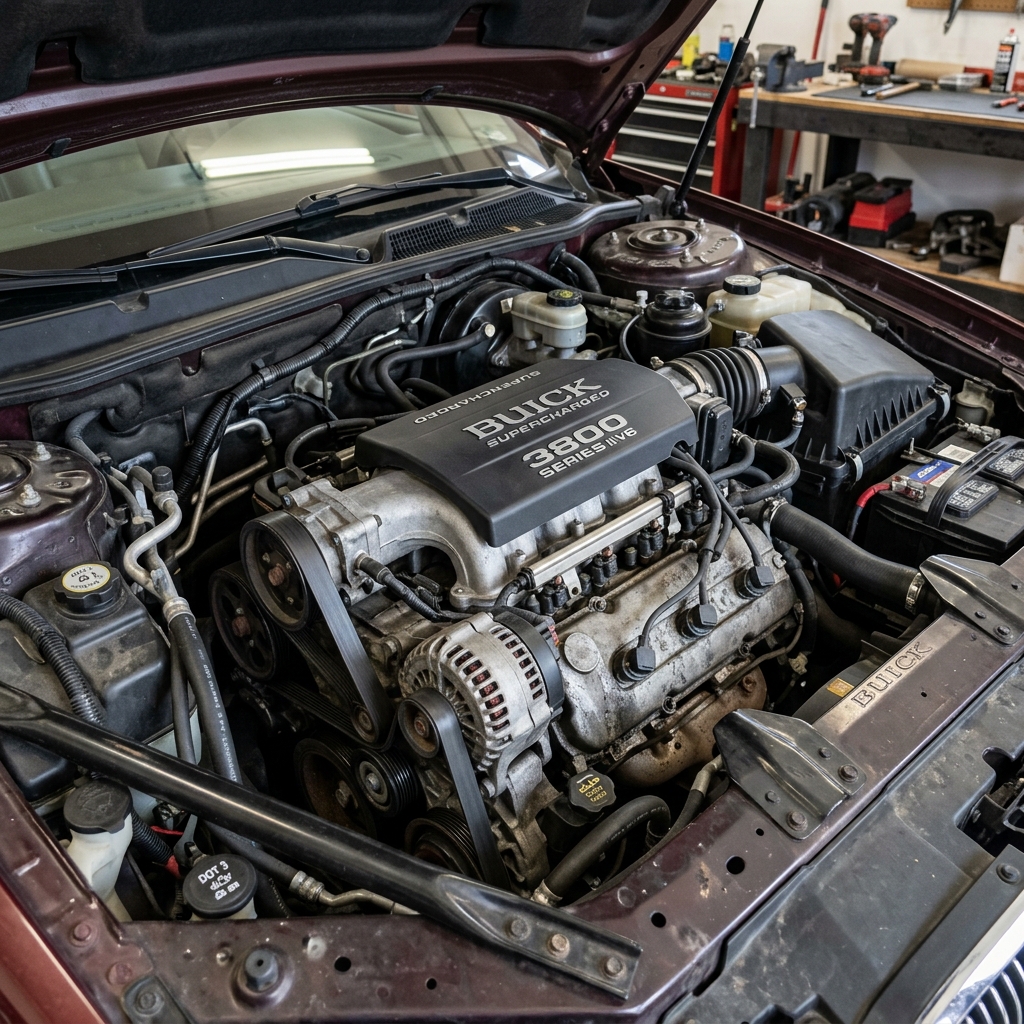 The 3.8L V6 is widely regarded as one of GM's most durable engines, though condition still matters.
The 3.8L 3800-series engine has a strong reputation among GM owners and technicians. We still wouldn't call one “bulletproof,” because that word tends to hide everything else that can go wrong around a good engine.
A 2007 Lucerne with a healthy 3.8L can still have:
- a worn transmission,
- coolant or oil leaks,
- corroded brake or steering lines,
- worn suspension,
- electrical faults,
- old rubber components,
- or years of deferred maintenance.
So we'd treat a 2006–2007 3.8L as a conditional buy.
A documented, rust-free example with a smooth transmission is worth considering. A neglected one isn't saved by having a 3800 under the hood.
What Are the Best Buick Lucerne Years to Buy?
Our first choice would be 2010.
It sits late enough in the production run to avoid some of the uncertainty surrounding the earliest cars, and it has the clearest positive comparative reliability signal among the Lucerne years we reviewed.
A clean 2011 with the 3.9L V6 would be close behind.
We wouldn't automatically call 2011 the most reliable Lucerne simply because it was the final year. There is less detailed reliability data available for it than there is for 2010, so there's no reason to pretend the evidence is stronger than it actually is.
Our shopping order would look roughly like this:
2010 3.9L V6 → 2011 3.9L V6 → exceptionally clean 2006–2008 3.8L V6
The important word there is clean.
If the 2010 has serious rust and the 2007 has service records, a clean underside, no warning lights, and a transmission that shifts properly, we'd rather own the 2007.
3.8L vs. 3.9L vs. 4.6L V8: Which Buick Lucerne Engine Should You Buy?
The engine matters enough that we wouldn't rank Lucerne years without considering it.
| Engine | Where it fits | Our buyer view |
|---|---|---|
| 3.8L V6 | Earlier Lucernes | Our preferred early configuration |
| 3.9L V6 | 2009–2011 | Our preferred later configuration |
| 4.6L Northstar V8 | Higher-performance models | Buy selectively; not our first choice for lowest ownership risk |
3.8L V6
The 3.8L is the main reason we'd hesitate to make a blanket statement such as “avoid every 2006–2008 Lucerne.”
It has been around in GM vehicles for a long time and developed a strong durability reputation. That reputation matters, but it should never substitute for inspecting the actual car.
On an early 3.8L Lucerne, we'd pay particular attention to:
- transmission operation,
- coolant and oil leaks,
- cold-start behavior,
- electrical accessories,
- underbody corrosion,
- maintenance records.
A nice 3.8L car can still be an appealing inexpensive sedan today.
3.9L V6
The 3.9L replaced the 3.8L as the Lucerne's later V6.
If we wanted a Lucerne as a comfortable daily driver rather than a collector or performance car, a 2010 or 2011 with the 3.9L is where we'd begin.
That doesn't mean we've proven the 3.9L is mechanically superior to the 3.8L. What we like is the combination of the later model years and the V6 powertrain.
You're still buying an old car, so a strong maintenance history matters more than arguments over which V6 has the better reputation online.
4.6L Northstar V8
The Northstar V8 deserves more nuance than it usually gets.
It's easy to find blanket advice online telling buyers to avoid anything with a Northstar. A lot of that reputation comes from problems associated with older generations of the engine and older Cadillac applications.
We wouldn't automatically transfer every old Northstar story onto the Buick Lucerne.
There are, however, reasons to approach the V8 as the higher-maintenance choice.
Certain V8 Lucernes had configuration-specific recalls. For example, some 2010–2011 V8 cars were recalled because the starter or alternator cable could contact the power-steering return line and potentially cause a fluid leak.
The V8 also gives you more components packed into an already large front-wheel-drive sedan, which can make some repairs less attractive from a cost and labor standpoint.
If our goal were a low-cost Lucerne to drive every day, we'd choose a V6.
If we specifically wanted the performance and character of a V8 Lucerne, we'd buy the best-maintained example we could find and keep more money aside for repairs.
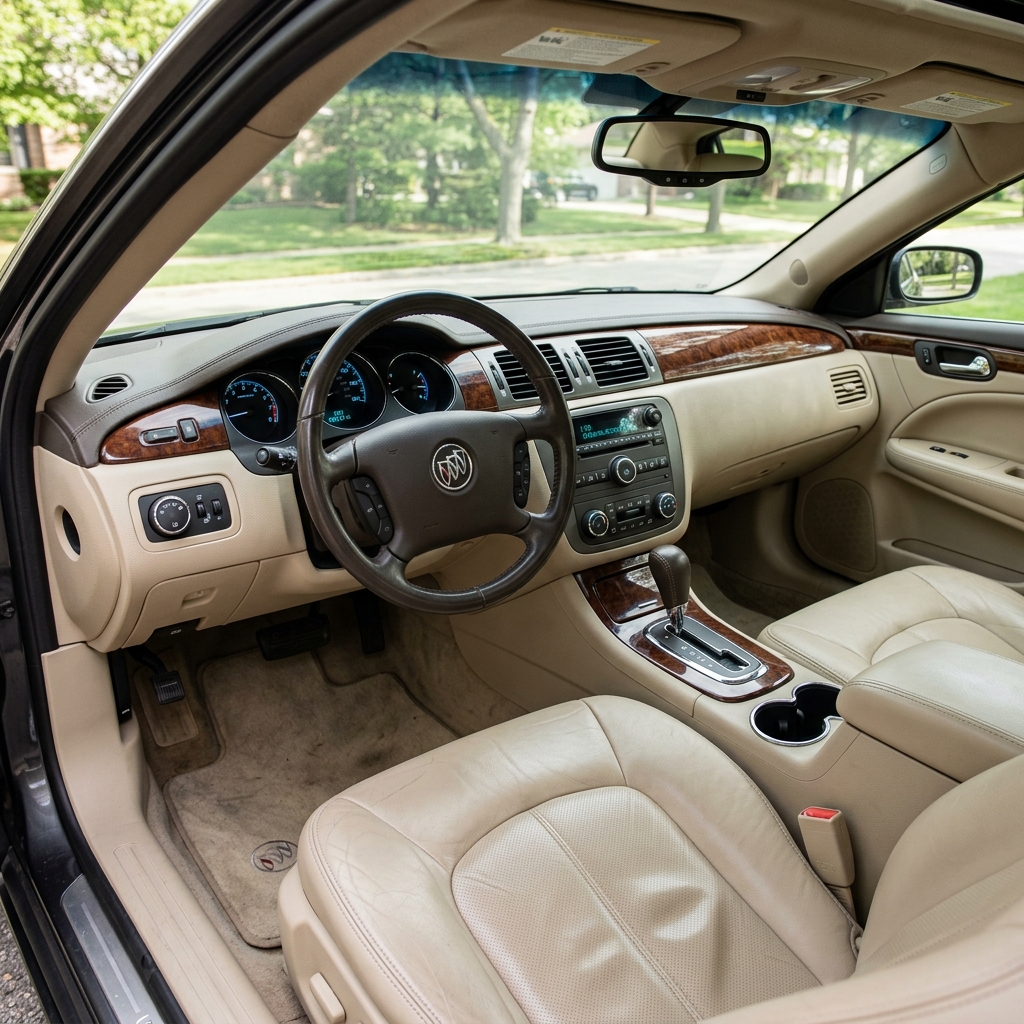 The interior of the Lucerne offers traditional Buick comfort, but electrical accessories should be tested thoroughly.
Common Buick Lucerne Problems to Check Before Buying
A useful buying inspection matters more than a giant list of problems copied from owner forums.
| Area | What we'd check |
|---|---|
| Rear electrical center | Heat damage, burnt terminals, damaged connectors, previous repair |
| Starting/fuel circuit | Intermittent no-start or stalling |
| Transmission | Delayed engagement, slipping, RPM flare, harsh shifts |
| Electrical equipment | Windows, locks, seats, lights, climate controls, warning messages |
| Cooling system | Coolant leaks, low coolant, overheating history |
| Rust/corrosion | Brake lines, steering lines, suspension areas, underside |
| Service history | Maintenance invoices, recall repairs, major previous work |
The rear electrical center is especially important on 2008–2011 cars because GM documented the problem rather than leaving buyers to rely on forum speculation.
We'd also spend real time testing the transmission.
Start the car cold. Shift into Reverse, then Drive. There shouldn't be a long delay before engagement. During the test drive, watch for slipping, flaring RPM between shifts, harsh changes, or a hesitation that changes as the transmission warms up.
Transmission complaints show up frequently in owner discussions, but that isn't enough to say every Lucerne transmission is defective. The individual test drive is more useful than the reputation.
Buick Lucerne Recalls You Should Check Before Buying
The Lucerne had several recalls, but recall count alone isn't a reliable way to rank model years.
Some campaigns applied broadly. Others were tied to equipment such as the heated washer-fluid system or specific V8 configurations.
Important Lucerne campaigns include:
| Campaign | Relevant coverage | Main issue |
|---|---|---|
| 14V355000 | 2006–2011 | Ignition switch could move out of RUN |
| 08V441000 | Certain 2006–2008 vehicles | Heated washer-fluid system overheating |
| 10V240000 | Certain 2006–2009 vehicles | Additional heated washer-fluid thermal concern |
| 10V553000 | Certain 2010–2011 V8 cars | Cable contact with power-steering return line |
The ignition-switch campaign is especially important because movement out of the RUN position could shut off the engine and affect power-assisted steering, braking, and airbag operation.
But don't assume a car still has an open recall just because its model year was included.
Before buying any Lucerne, run its 17-character VIN through the official NHTSA recall lookup.
Also remember that the 2008–2011 rear electrical-center issue discussed earlier was handled through a GM special-coverage program rather than being the same thing as a safety recall.
What Matters More Than Model Year on a Buick Lucerne?
A Lucerne is old enough now that its history can matter more than whether the badge on the door says 2008 or 2010.
We'd rather buy a 2007 that has been garage-kept, regularly serviced, and driven on clean roads than a 2011 with serious corrosion and no maintenance records.
Before buying one, we'd want to see it completely cold.
If the seller has already warmed the car before you arrive, you lose the opportunity to see:
- hard starting,
- cold-start noises,
- smoke,
- rough idle,
- warning lights,
- leaks that appear after sitting.
We'd also test every electrical function we could find.
Run the windows. Move the seats. Try the locks. Turn the climate control through its settings. Watch the dashboard. Check exterior lights.
On a 2008–2011 car, we'd make sure the area around the rear electrical center gets inspected.
Then get underneath it.
Rust deserves more attention than many “years to avoid” guides give it. Brake lines, steering lines, mounting points, and the general underside can tell you far more about the future of an old Buick than a low odometer reading can.
And don't assume low mileage automatically means good condition.
A low-mileage car can still have:
- old fluids,
- hardened seals,
- corrosion,
- deteriorated rubber,
- sitting-related issues,
- deferred maintenance.
Mileage is one part of the story. Service history tells you much more.
Which Buick Lucerne Would We Buy?
We'd look for a 2010 Lucerne with the 3.9L V6 first.
A clean 2011 3.9L would be right behind it.
We'd also consider a particularly nice 2006–2008 3.8L if the price reflected the car's age and the inspection came back clean.
We would be much less interested in any Lucerne showing:
- serious rust,
- transmission slipping,
- repeated overheating,
- burnt or melted electrical components,
- intermittent stalling,
- unexplained no-start problems,
- warning lights the seller can't explain,
- recently cleared codes with no repair records.
And that's the biggest thing we'd keep in mind while shopping.
The best Buick Lucerne isn't necessarily the newest one. It's the right engine in the best-kept car you can verify.
Frequently Asked Questions
What is the most reliable year for a Buick Lucerne?
2010 is our preferred starting point. It has the strongest combination of later production, V6 availability, and comparative reliability evidence among the Lucerne years we reviewed.
A clean 2011 can also be a very good candidate, but we wouldn't claim it is definitively more reliable than 2010 because there is less detailed reliability data available.
Which Buick Lucerne engine would we choose?
For an earlier Lucerne, we'd look for the 3.8L V6.
For a later car, we'd favor the 3.9L V6, particularly in a 2010 or 2011.
We wouldn't completely rule out the 4.6L Northstar V8, but if the goal is keeping ownership simple and relatively inexpensive, the V6 is the more sensible place to start.
Is a Buick Lucerne a good used car?
It can be.
The Lucerne still makes sense as an inexpensive, roomy, comfortable sedan if you find the right one. At this age, we'd focus less on finding a supposedly perfect model year and more on finding a car with a clean underside, healthy transmission, functioning electrical system, documented maintenance, completed recall work, and no signs of serious overheating or neglected repairs.